Katya Herberg
No such thing as the right or the wrong way to go into research
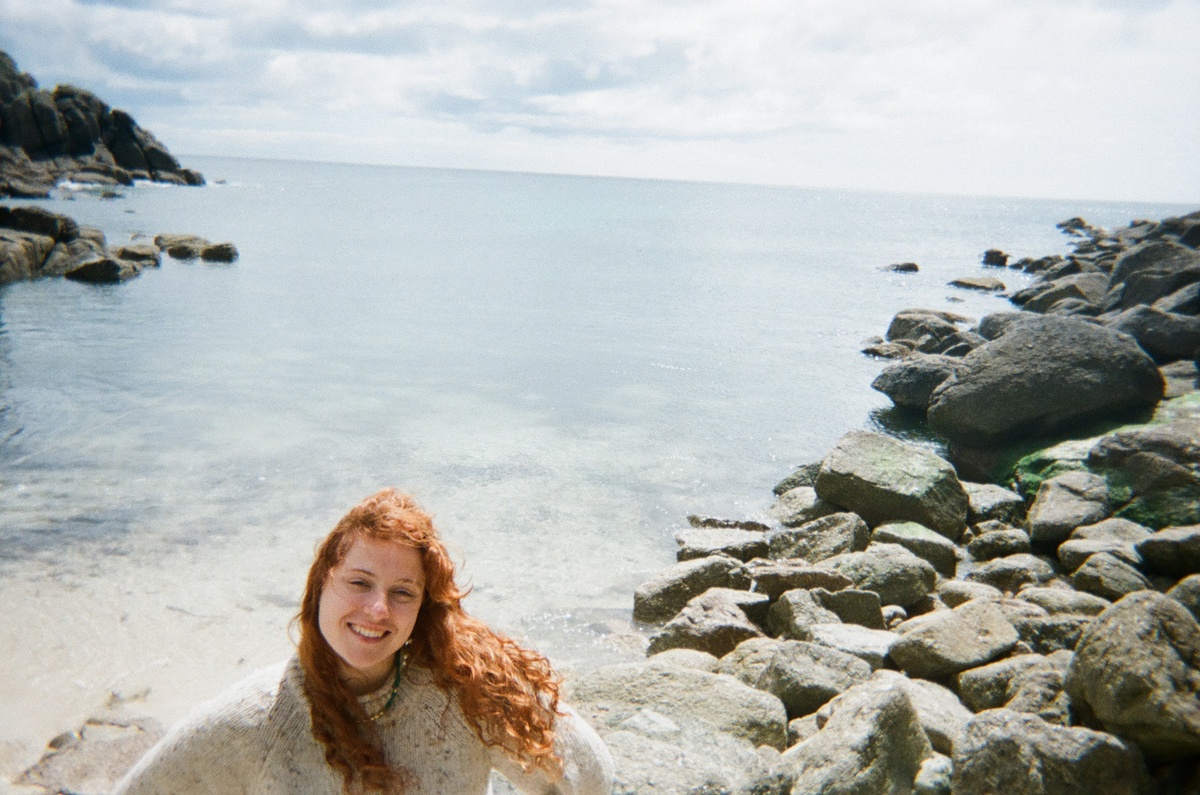
I am interested in non-human primate cognition and culture from an evolutionary perspective. I'm beginning a PhD at St. Andrews University in September, researching the evolution of normativity and social cognition, particularly during primate play. This will look at the extent to which apes hold normative expectations about others during playful interactions, using a mixture of experimental, observational, and computational methods to compare many different species.
I am also currently finishing up a paper with the Max Planck Institute for Evolutionary Anthropology and Utrecht University, looking at cultural exaptation. This is part of the extended criteria for cumulative cultural evolution, the way in which culture can evolve in complexity over time via social learning, and something that has not really been looked at in non-human primates before.
We've only really looked at social normativity using human-like expectations. I believe my research will bridge existing inter-species gaps by looking at play, a naturally occurring primate behaviour, and not only under highly artificial lab conditions. I hope to be making observations across several wild and captive environments. Studies from the wild permit understanding of ecologically-relevant primate cognition, whilst studies in captivity contribute to our understanding of their cognitive capacities when resources are not constrained. Beyond theoretical contributions, this work has implications for animal welfare and experimental design: if primates interpret social interactions in normative terms, then inconsistent or seemingly unjustified reward and correction structures may undermine their understanding of tasks, with consequences for both welfare and data validity.
Curiosity and excitement are far more valuable than grades. Those grades are a stepping stone to get into the things you want to do, but having passion will carry you much further. The world of primatology is not just about how well you're able to write an exam, like many school systems would have you believe. Nevertheless, developing strong quantitative and analytical skills will be helpful to complement your biological knowledge. Also, the ability to think critically about methods, statistics and evolutionary theory is just as valuable as field experience. On that note, if you're able to see things in new and interesting ways, that will come across well in interviews and conversations with people when discussing your research.
Another piece of advice I'd give is to not be discouraged by a non-linear career path. Opportunities come from everywhere and they'll always feed into whatever you end up doing. It's easy to look at the researchers you admire and think “oh my god, they've been doing this nonstop since they were a kid”. However, they're not going to put anything else on their CV are they? One of the professors I had at Oxford didn't do her PhD till she was in her mid 30s and she's had a hugely successful career. There’s no such thing as the right or the wrong way to go into research, and there is so much more to life than just how quickly you're advancing through your academic career.
I studied many primate species during my masters and my time at the Max Planck Institute in Leipzig – mainly the old-world monkeys and great apes, spending the most time with Chimpanzees. In primates generally, I admire the complexity of their social systems, and the way individuals navigate many types of stressful or challenging interactions while showing high personal resilience. If you spend any time watching primates, you will see how their lives can be rather aggressive and emotional, but they must carry on regardless. Baboons, for example, have complex hierarchical systems where they spend their entire lives trying to achieve higher ranks for better mating success. Robert Sapolsky talked about this a lot, and it is a grueling, stressful existence. I admire that ability to persevere whilst remaining playful and highly social.
The thing that influenced me the most was watching a lot of David Attenborough when I was a kid. When my parents were busy working, they would sit me in front of David Attenborough and that's how I'd start my weekend. I have two younger brothers, so we'd be watching it all together. I also subscribed to loads of wildlife magazines and would sponsor animals in the wild. There was always a big emphasis on connecting with nature, and growing up in London, it's not always easy to do that. I found ways though, and remember building snail and bug hotels and loving watching insects and worms. My grandma's partner was also a farmer, so I spent a lot of time there growing up and taking care of the weak lambs. I realized that being surrounded by nature was not only what I loved, it was also what I was interested in, which led me to where I am now.
I did my undergrad in Human Sciences at Exeter University from 18 to 21. I'm from London, so I moved to this small campus in the middle of nowhere, Cornwall. I had the most amazing three years, surrounded by researchers who were all so passionate. I knew as soon as I started my degree that I wanted to keep doing research. I went straight into my master’s at Oxford from there, studying cognitive and evolutionary anthropology. I thought I was going to remain super interested in human cultural evolution, but it wasn't until I started that I realized how interested I was in non-human culture and cognition. I remember very distinctly having a conversation with one of my professors, discussing PhD’s. I was talking about doing a PhD in paleoanthropology, and she just looked me dead in the eye and was like “Katya, you light up when you talk about primates … You can't just do bones”. She was so right, and that really stuck with me. After my master's, I went into a PhD at the Max Planck Institute of Evolutionary Anthropology in Germany, which I very quickly realized was not for me. Not because the position wasn't right; I loved the project, and the supervisors I had were amazing. But living abroad, away from everyone and everything I had ever known, was just so hard. So, I left that position six months in with the amazing support from my supervisors, and have been in London for the last year. I left that position in July 2025 and this year I've been working with the Primate Society of Great Britain, writing up the paper I started during my PhD at the Max Planck Institute, applying to new PhDs, and developing research ideas with cool people in the UK. That led me to the position I'll be starting in September at St. Andrews with Dr. Amalia Bastos which I am really excited about. I've also been working in a bookshop and doing volunteering, which has been such a nice break from academia.
My undergrad supervisor, Alex Mesoudi, was very supportive and got me interested in things I had never heard of before, fostering in me my first ever interest in being an academic. Then my master’s supervisor, Thomas Püschel. He helped me love computational methods, which I never thought I would.
From the Max Planck, my supervisor Daniel Haun, who is the director of the Comparative Cultural Psychology department, and my co-supervisor, Edwin van Leeuwen, from Utrecht University. Both of them were so supportive throughout my decision to leave. I remember Ed saying “you cannot sacrifice your mental health for the fact that you want to stay at the Max Planck, you need to just do what's right for you”. When I told my department I was leaving, it resonated with some of them on a personal level, because everyone's gone through these things where they've had to take a break from research or the place because it has been impacting their mental health. Ed and Daniel have been so wonderful over the last year in helping me apply for PhDs and continuing to do this research with me. They reached out after I left asking if I would want to publish the paper that I started whilst I was there because they felt it's exciting and would like me to have some closure on it.
Finally, someone really random I can really credit with my academic career is Nick Royle, who works as an undergraduate programme director at the University of Exeter. He called me up during covid whilst I was worrying about university and said “we've seen your UCAS application and think you'd be perfect for human sciences. This is what it is and we'd love to have you”. I had been planning on doing psychology at Edinburgh but I was like, you know what? Sold! He was the only person who took the initiative to phone me up and if it wasn't for him, I don't think I would have ever seriously thought about doing human sciences. The funny thing is, I don’t think he knows just how important that phone call turned out to be.
I am on BlueSky, where I will post my publications and work @katyaherberg.bsky,social
You can also find my work and upcoming event with PSGB here.


