
Welcome to the Primate Society of Great Britain (PSGB)
Founded in 1967, the Primate Society of Great Britain (PSGB) is the UK's national primatological society, promoting research into all aspects of primate biology, conservation and management.
The PSGB is dedicated to equality, diversity and inclusion, with a subcommittee focused on embeding EDI into the existing activities of the Society and developing new initiatives to promote and encourage EDI moving forward.
We have an active and thriving membership base that is open to anyone, regardless of education level, career stage, primatological discipline or institution. Join us today.
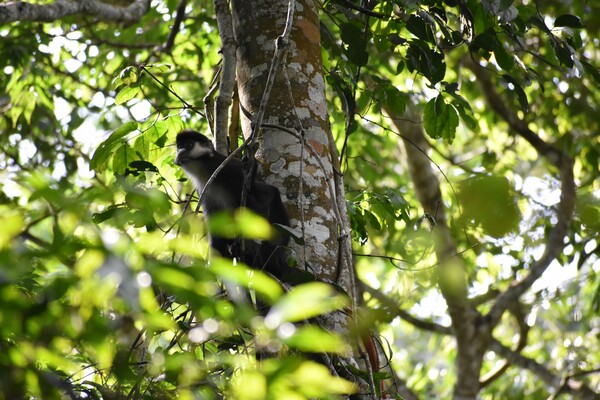
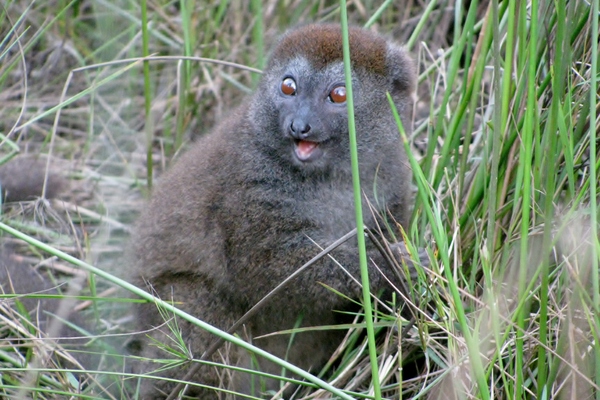
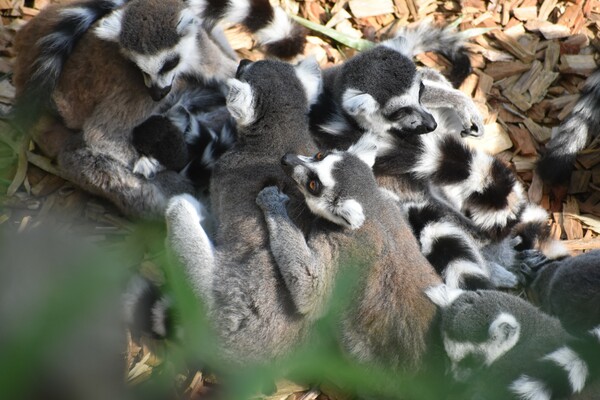

"Primates are a uniquely fascinating group of animals, providing us with clues about the evolution of human behaviour, social complexity and behavioural flexibility. The study and conservation of primates is therefore crucial, and the Primate Society of Great Britain is committed to working with scientists, students and the public to achieve these aims. Please do consider joining our society as a member, and help us address the threats many primate species face around the world.”
- Professor Bridget Waller, PSGB President

Announcing our new patron, Sir Stephen Fry!
Like you (I assume, but with a fair degree of confidence) I am a primate. I am lucky enough over the course of my life to have met and communed with a large number of quite different primates from the varied branches of our extended family. When I consider my time with mountain gorillas in Bwindi; adventures with Mme Berthe lemurs, dancing with sifakas, howling with indris and goggling back at staring aye-ayes in Madagascar; befriending proboscis monkeys and orangutan infants in Saba, chimps on Ngamba Island on Lake Victoria; tamarins, capuchins, spider and woolly monkeys in South America; vervet, colobus monkeys and savannah baboons in Africa… I realise I have been luckier than most with so many opportunities to come close to so many of our cousins.
At one end of things, the world reeled with the astonishing news quite recently of the recording of an entirely new species of monkey in the Democratic Republic of the Congo, at the other end, there are species of gibbon and leaf monkey, or gorilla and lemur, that are down to the last hundred (and fewer) living representatives, through poaching, habitat degradation, deforestation and the depredations of climate change.
There is so much we can learn from primates - about ourselves and about our place in the world. Human primates and their fellows can coexist and flourish. I am very proud to have been asked to be a patron of the Primate Society of Great Britain, whose work nationally and internationally in conservation and research is hugely respected. But to follow in the footsteps of so great a personality and primatologist as Jane Goodall! I cannot pretend to be anything more than a keen and blundering amateur when it comes to the science, the primatology and anthropology which Dame Jane made her life's work with such unparalleled brilliance and humanity. But my love for primates and the world of the PSGB is strong and I am delighted to accept this role.”
Read our full announcement here.
Support Primate Research, Conservation & Captive Care!
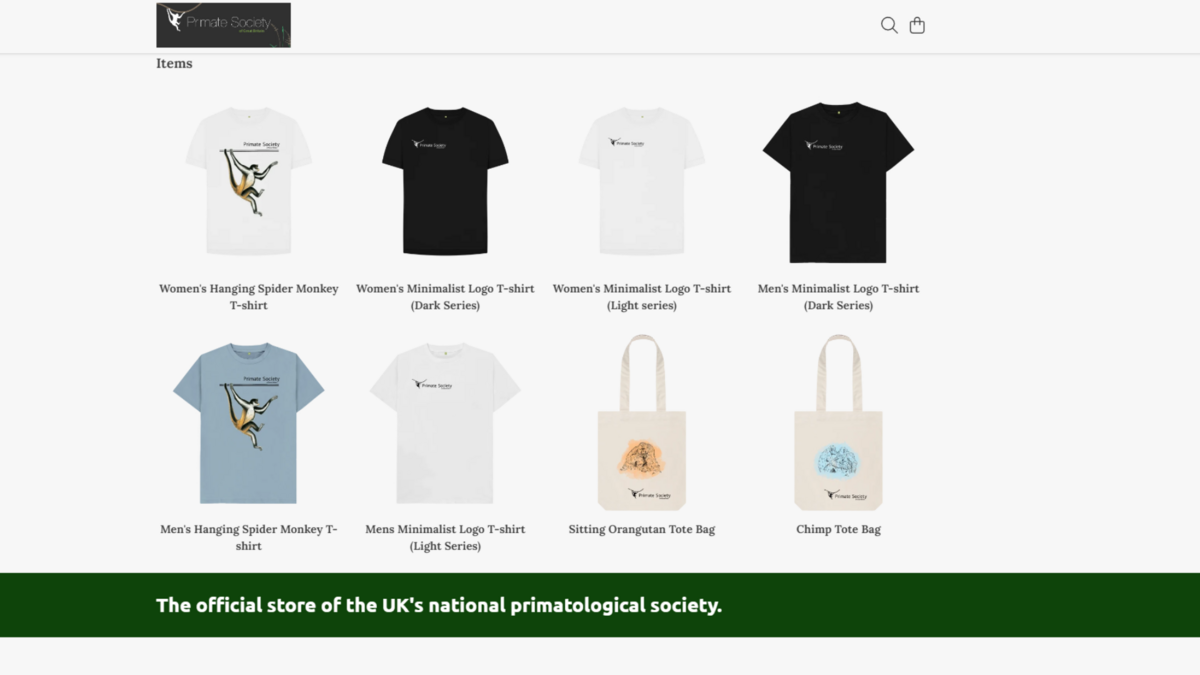
Visit our online store!
We offer a range of clothing and totes, in a variety of sizes and styles, available to buy from here. You can now proudly wear PSGB themed merch wherever you go!

PSGB 2026 Conservation Cause
Le Groupe d’Etude et de Recherche sur les Primates de Madagascar (GERP) has been selected as our 2026 Conservation Cause! Please join us in supporting this fantastic organisation, who are working to protect Madagascar's lemur populations: some of the most threatened mammals in the world, with over 95% of species at risk of extinction. Learn more here.
Latest News
Become a Fellow of the Society (FPSGB)!
We are inviting applications to our new membership class, Fellowship of the Society (FPSGB).
As of 2026, Fellowships are a new way to support the Society, while offering Fellows recognition not only for their contributions to the Society but to the wider field of primatology.
Members who have maintained full membership for a minimum of 7 years (with exceptions allowed for career breaks) are invited to apply for these Fellowships.
To apply, members must be supported by two current Fellows or members of the Council and need to submit a recent copy of their CV. Fellows will be elected annually by Council.
The FPSGB memberships will cost £45 annually.
If you wish to apply or have any questions about the process, please contact the Membership Secretary ([email protected]).
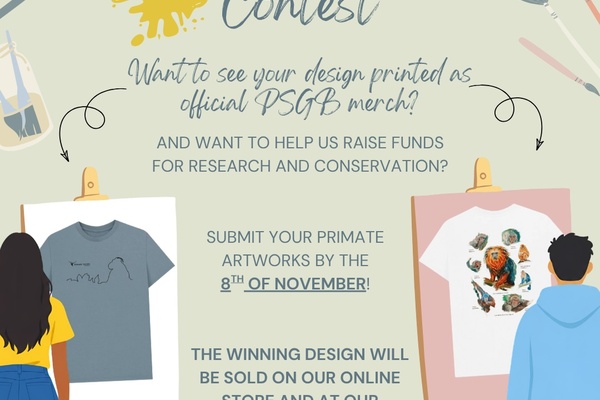
Our 2026 T-Shirt Design Contest is now open!
Get your pencils and paintbrushes ready because it’s time for the PSGB T-Shirt Contest! 🎨 Are you skilled with watercolours or experienced with digital art? Want to contribute to the conservation, research, and captive care of primate species? This is your chance!
The Primate Society of Great Britain is organising its 2026 T-Shirt Contest! All submissions are welcome and art pieces can be submitted following this link. The deadline is the 8th of November, after which we will put all submitted designs to a public vote.
The winning design will be put on a T-shirt and will be sold at the upcoming Joint Winter Meeting of ASAB and PSGB, as well as on our online store. This is a fantastic opportunity for artists to reach a new audience and make a meaningful contribution to our cause.
ASAB-PSGB Joint Conference Registration
Registration for the joint ASAB-PSGB winter meeting in Edinburgh in December is now open!
As the venue capacity is limited (300 seats), it will be essential that you book your tickets as soon as you can. Registration will close as soon as capacity is reached. You can then submit abstracts if you plan on presenting by the 15th of August.
As a reminder: attending Day 1 and 2 is free to all (the ASAB part of the meeting; you still need to register), attending Day 3 requires a registration fee (the PSGB part of the meeting).
Members' tickets will be £35 for students and £65 for full or associate members. Get them fast!
Because the theme of the meeting is on social learning and culture, only talks that relate to this theme will be accepted. However, if you would like to present a poster, you can present on any topic within the remit of PSGB.
More details about the meeting at: https://asabpsgbwinter.github.io//2026/

Primatology Profiles
Each month, we are interviewing an individual working in a field related to Primatology to discuss their work and background, ultimately showcasing who they are and what they do.
Through these conversations with a diverse group of contributors, this project recognises Primatology as an intricate and practical field with many forms of engagement. This can range from researchers studying behaviour and physiology to ask questions concerning evolution and ecology, to conservationists working for policy change, and those directly involved with primates day to day in captive care facilities.
To find out more, check out our Primatology Profiles page, or read our first profile from Prof. Jacob Dunn
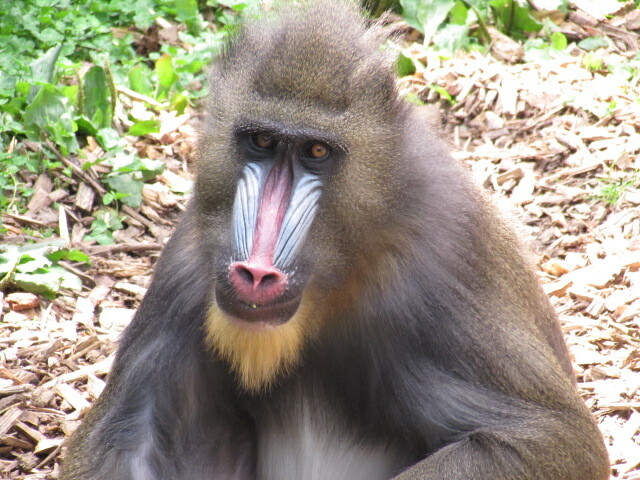
PSGB statement on primates as pets.
The Primate Society of Great Britain is fundamentally opposed to the keeping of primates as pets, and fully supports the banning of this practice.
We recognise at the same time that appropriate measures need to be put in place for the protection, rescue and rehabilitation of the individual animals currently held as pets.
You can read our full statement here.


